
Built around the diagnostic pathway.
BioVantra is a prostate-focused diagnostic laboratory built to preserve the relationships among imaging, biopsy location, tissue pathology, tumor biology and anatomy.
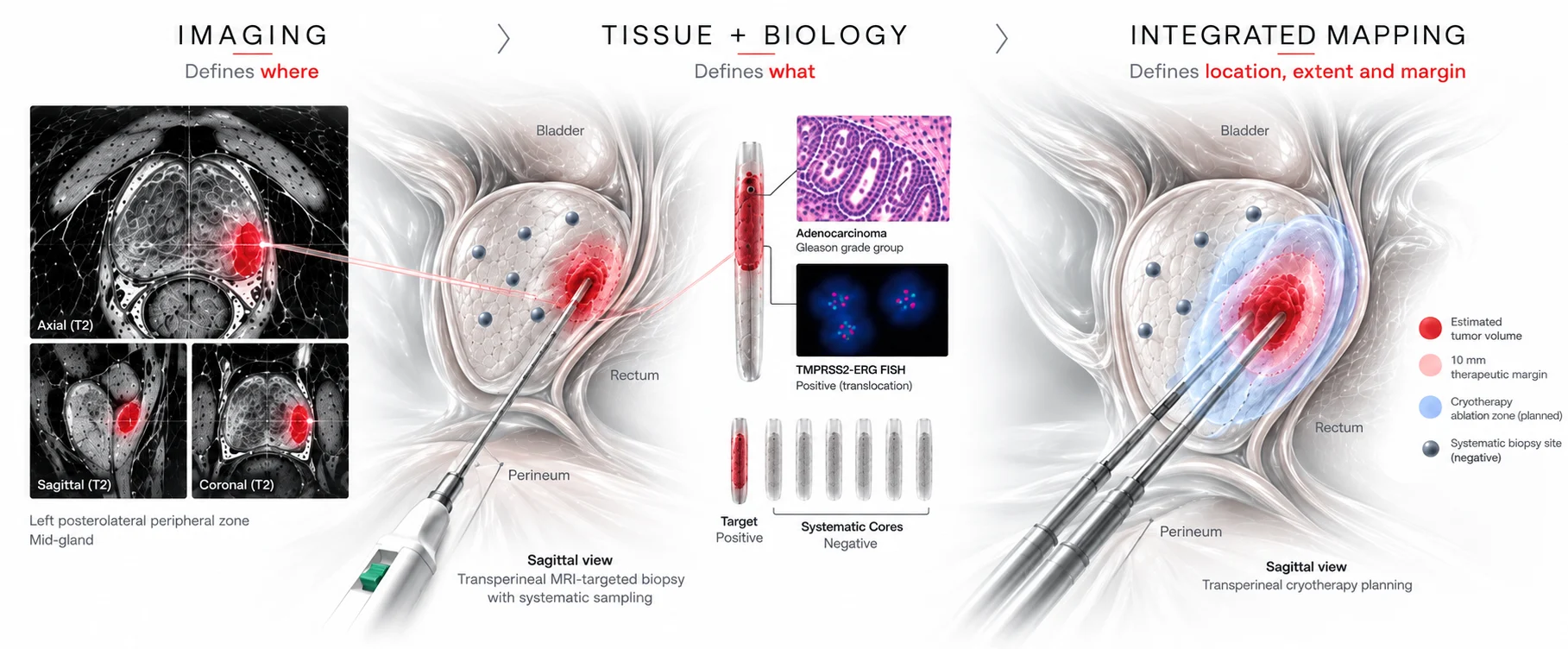
Modern prostate cancer evaluation produces information at several different stages. MRI establishes where suspicious disease appears. Fusion biopsy connects those imaging findings to tissue obtained from known locations.
BioVantra preserves that spatial identity through specimen processing, subspecialty pathology and appropriate cellular and molecular characterization so the findings can ultimately be integrated with imaging and cancer mapping.
The goal is straightforward: to provide diagnostic information that describes not only whether cancer is present, but what it is, where it is and how far it may extend.
Connecting diagnosis to location.
Prostate cancer findings become more useful when their spatial relationships are preserved. BioVantra's approach connects imaging-defined location with tissue diagnosis and tumor characterization, then brings those findings back into an anatomic framework.
Connected from order to report.
The diagnostic pathway depends on more than the final interpretation. BioVantra uses Lumea's BxLink platform to maintain a connected laboratory record from order and requisition through specimen information, diagnostic reporting and ancillary testing.
For referring practices, BxLink provides a secure environment for submitting laboratory orders, managing specimen and requisition information, accessing completed reports and requesting ancillary studies.